
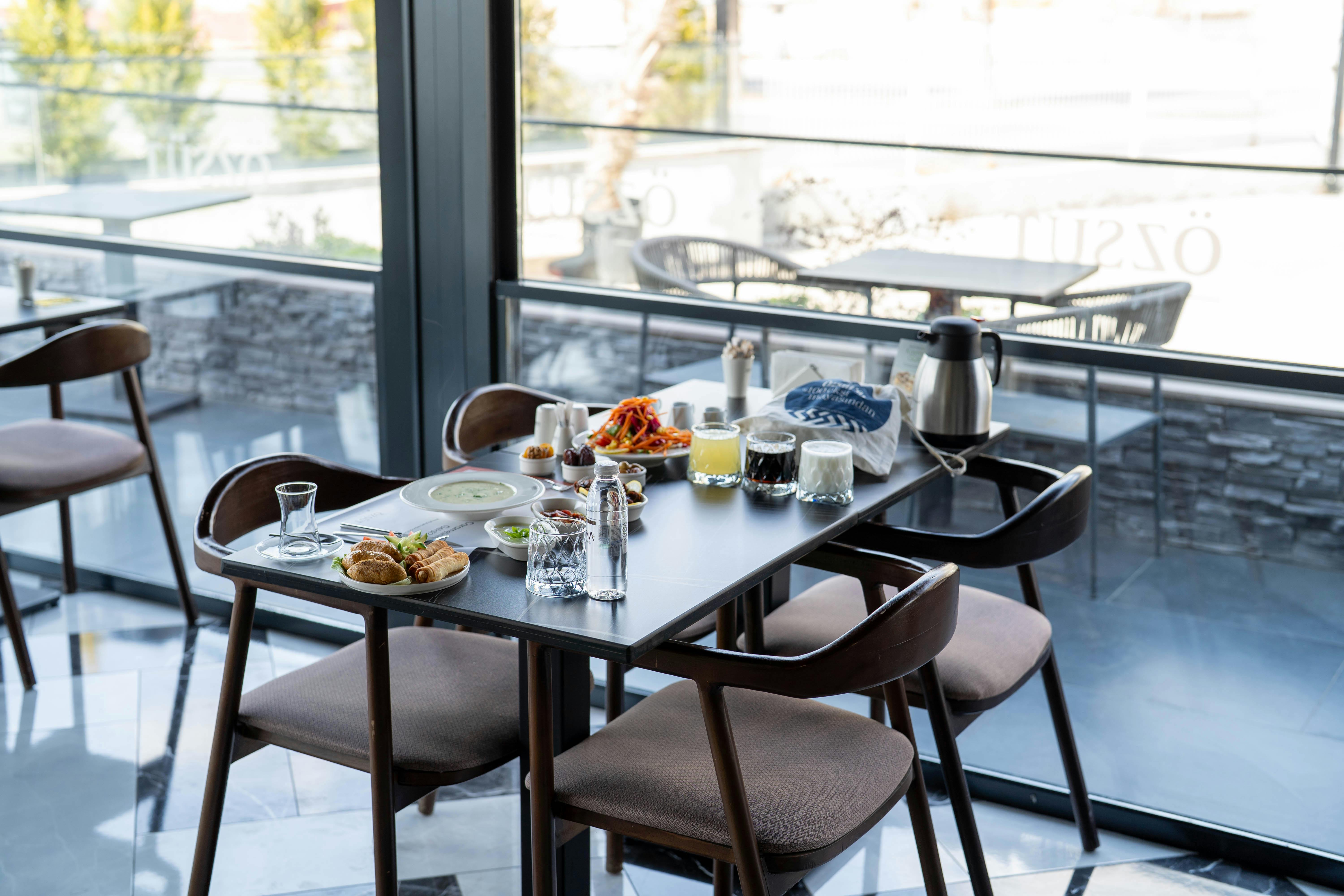
Step into 2026 where Artificial Intelligence and advanced robotics are no longer sci-fi novelties but essential ingredients in the culinary world. Discover how smart restaurant technology is revolutionizing everything from order-taking and food preparation to personalized dining and efficient operations. This comprehensive guide helps you navigate the best AI-powered dining experiences and understand the platforms driving this gastronomic revolution, optimizing your choices for the future of food. Explore, compare, and book your next futuristic meal!
Introduction to the Topic
Welcome to 2026, a year where the aroma of sizzling steaks mingles with the subtle hum of advanced machinery, and your favorite barista might just be an impeccably programmed robotic arm. The restaurant industry, once steeped in tradition, has fully embraced the digital revolution, with Artificial Intelligence (AI) and robotics emerging as the undisputed game-changers. From the moment you browse a menu to the final payment, smart technology is meticulously crafting an experience that is more efficient, personalized, and utterly unforgettable. This isn't merely about automating tasks; it's about redefining hospitality, optimizing every facet of a restaurant's operation, and creating entirely new dining paradigms. For restaurateurs, this means unprecedented efficiency and insight. For diners, it promises bespoke experiences tailored to every whim and preference. Spoonwala.com is here to guide you through this exciting new landscape, helping you understand where to find these innovative experiences, which platforms are leading the charge, and how to make the smartest choices for your next culinary adventure.
Backgrounds & Facts
The journey from rudimentary automation to sophisticated AI began decades ago, but the acceleration witnessed in the early 2020s has been nothing short of phenomenal. By 2026, AI integration in the restaurant sector is no longer an optional luxury but a competitive necessity. Industry reports indicate that over 70% of leading restaurant chains globally have adopted some form of AI, ranging from intelligent inventory management to advanced customer relationship platforms. The drivers are clear: escalating labor costs, the perpetual demand for faster service, and consumers' increasing desire for personalized interactions.
Key areas of AI and robotics deployment include:
- Front-of-House Automation: AI-powered voice assistants for order taking (both drive-thru and in-store), smart kiosks with facial recognition for personalized recommendations, and advanced reservation systems that predict no-shows and optimize table turnover.
- Back-of-House Robotics: Robotic chefs capable of executing complex recipes with precision, automated food prep machines for chopping and dicing, and robotic baristas crafting perfect coffee and cocktails. These systems ensure consistency, reduce waste, and allow human chefs to focus on innovation and creativity.
- Data Analytics & Predictive AI: Restaurants are leveraging AI to analyze vast datasets – from peak dining hours and popular menu items to supplier pricing and weather patterns. This allows for predictive inventory ordering, dynamic pricing strategies, and highly targeted marketing campaigns, significantly boosting profitability and reducing food waste.
- Personalized Dining Experiences: AI algorithms learn individual diner preferences, dietary restrictions, and even mood to suggest bespoke menu items, create custom cocktails, and tailor the entire ambiance of the dining space.
The market for restaurant AI solutions is projected to exceed $10 billion by the end of 2026, underscoring the massive investment and rapid advancements in this sector. This isn't just about replacing humans; it's about augmenting capabilities, freeing up staff for higher-value customer interactions, and creating a more seamless and enjoyable dining experience for everyone.
Expert Opinion / Analysis
The shift towards AI and robotics in restaurants has sparked lively debate among industry leaders, technologists, and culinary experts. Chef Anya Sharma, founder of the critically acclaimed 'Synthetica Bistro' in Neo-London, a restaurant renowned for its robotic kitchen and AI-curated menus, offers a compelling perspective: "AI frees chefs to be true artists. My robotic team handles the repetitive, precision-intensive tasks, allowing my human chefs to focus on innovation, flavor development, and the creative plating that truly elevates a dish. It's not about replacement; it's about enhancement, pushing the boundaries of what's possible in gastronomy."
Dr. Kenji Tanaka, CEO of 'DineSmart AI Solutions,' a leading provider of AI-powered restaurant management platforms, emphasizes the economic advantages: "The data insights AI provides are unparalleled. Our clients report up to a 15% reduction in food waste and a 20% increase in operational efficiency within the first year of implementation. AI helps restaurants predict demand with uncanny accuracy, optimize staffing, and even fine-tune menu pricing in real-time based on market conditions. It's a significant boon for the bottom line, especially in a historically low-margin industry."
However, the conversation isn't without its challenges. Concerns about job displacement remain, though many experts argue that AI is creating new roles, such as 'robot technicians,' 'AI sommeliers,' and 'data-driven menu designers.' Ethical considerations, such as data privacy for personalized recommendations and the potential for a loss of the 'human touch,' are also actively being addressed through transparent AI policies and hybrid service models that blend technology with traditional hospitality. "The key," notes restauranteur Maria Rodriguez of 'The Human Touch Eatery,' which uses AI for backend efficiency but maintains a fully human front-of-house, "is finding the balance. Technology should enhance, not erase, the warmth and connection that makes dining out so special." The consensus is clear: AI is here to stay, and its intelligent integration is the path forward for a thriving, innovative restaurant industry.
💰 Best Options in Comparison (VERY IMPORTANT)
Navigating the burgeoning landscape of restaurant AI and automation solutions can be daunting. To help you make informed decisions, whether you're a restaurateur looking to upgrade or a diner seeking the most cutting-edge experiences, we've identified three leading categories of AI solutions that are defining the industry in 2026. Each offers distinct advantages, catering to different operational needs and desired customer experiences.
DineBot Pro: The Ultimate Front-of-House AI
DineBot Pro is a comprehensive suite designed to revolutionize customer interaction and streamline front-of-house operations. It integrates AI-powered voice ordering systems, smart kiosks with advanced facial recognition for personalized greetings and order recall, and a predictive reservation platform. This system learns customer preferences over time, offering tailored recommendations and even anticipating dietary needs. Its robust CRM module allows for highly personalized marketing and loyalty programs.
RoboChef Systems: Precision & Efficiency in the Kitchen
For restaurants focused on consistency, speed, and waste reduction in the back-of-house, RoboChef Systems offers state-of-the-art robotic cooking stations and automated prep units. These robots can execute complex recipes with micron-level precision, handle repetitive tasks like chopping and frying, and integrate with inventory management to minimize spoilage. Their modular design allows for scalable implementation, from single-dish stations to fully automated kitchens. Human chefs oversee the creative process, while robots ensure flawless execution.
FlavorAI Analytics: Data-Driven Menu & Operations Optimization
FlavorAI Analytics is a powerful backend solution that leverages advanced machine learning to optimize every aspect of a restaurant's business intelligence. It analyzes real-time sales data, social media trends, local events, and even weather forecasts to predict demand, suggest dynamic pricing, and recommend menu adjustments. Its supply chain AI ensures optimal inventory levels, reducing waste and negotiating better supplier deals. This platform is ideal for restaurateurs seeking to maximize profitability and identify untapped market opportunities through data-driven insights.
To help you compare these transformative solutions, here's a detailed breakdown:
| Feature | DineBot Pro | RoboChef Systems | FlavorAI Analytics |
|---|---|---|---|
| Primary Focus | Customer Interaction & FOH Efficiency | Kitchen Automation & BOH Precision | Business Intelligence & Profit Optimization |
| Key Technologies | Voice AI, Facial Recognition, Predictive CRM, NLP | Robotics, Machine Vision, Precision Cooking Algorithms | Machine Learning, Predictive Modeling, Big Data Analysis |
| Ideal For | Quick-service, Fast-casual, Fine Dining (reservations) | High-volume kitchens, Ghost Kitchens, Consistency-focused chains | All restaurant types seeking data-driven decision making |
| Customer Experience Impact | Hyper-personalized service, faster ordering, seamless reservations | Consistent quality, faster dish delivery, innovative culinary experiences | Optimized menus, fair pricing, availability of popular items |
| Operational Benefits | Reduced FOH labor, improved order accuracy, enhanced loyalty | Reduced BOH labor, minimized waste, increased cooking speed & consistency | Maximized profit margins, reduced food waste, optimized inventory |
| Integration Complexity | Moderate to High (requires POS & CRM integration) | High (physical installation, kitchen redesign) | Moderate (data pipeline setup, API integration) |
| Estimated ROI (Annual) | 15-25% through efficiency & increased sales | 20-35% through labor & waste reduction | 10-20% through optimized pricing & inventory |
Outlook & Trends
The future of AI and robotics in restaurants is poised for even more profound transformations beyond 2026. We can anticipate several key trends that will shape how we dine:
- Hyper-Personalization 2.0: Imagine AI anticipating your cravings based on your health data, calendar, and even real-time mood analysis, suggesting a perfect meal before you even realize you want it. AI will move from reactive recommendations to proactive culinary curation.
- Ethical AI & Transparency: As AI becomes more pervasive, there will be a greater emphasis on ethical guidelines. Blockchain technology integrated with AI will provide unparalleled transparency regarding food sourcing, preparation, and even the 'digital footprint' of your meal, ensuring sustainability and food safety.
- Seamless Home-to-Restaurant Integration: Your smart home assistant might pre-order your regular coffee as you leave for work, or your autonomous vehicle could route you to a restaurant with a table ready, based on your dietary preferences and a glance at traffic and wait times.
- Subscription Dining Models: AI will power personalized meal subscription services, where your weekly menu is dynamically adjusted based on your activity levels, nutritional goals, and evolving taste preferences, delivered by autonomous drones or vehicles.
- Augmented Reality Dining: Beyond simple menu displays, AR could transform your dining table into an interactive canvas, projecting visuals that complement your meal, or allowing you to 'see' the nutritional breakdown and origin story of each ingredient in real-time.
- Human-AI Collaboration at its Peak: The narrative will shift further from 'replacement' to 'synergy.' AI will handle the data, the precision, and the heavy lifting, allowing human staff to focus entirely on empathetic service, creative innovation, and building genuine connections with diners.
These trends promise a dining landscape that is not only more efficient and profitable for businesses but also incredibly diverse, engaging, and deeply personal for every diner. The restaurant of tomorrow will truly be a smart, responsive, and delightful experience.
Conclusion
The year 2026 marks a pivotal moment in the culinary world, where Artificial Intelligence and robotics are no longer futuristic concepts but integral components of the modern dining experience. From the efficiency of automated kitchens to the hyper-personalized recommendations at your table, smart technology is reshaping every aspect of the restaurant industry. For restaurateurs, these innovations offer unprecedented opportunities for efficiency, profitability, and customer satisfaction. For diners, it promises a future of dining that is more convenient, consistent, and tailored to their individual tastes than ever before.
As you plan your next meal or consider upgrading your restaurant's operations, remember that the future of flavor is intelligent. Explore the innovative platforms like DineBot Pro, RoboChef Systems, and FlavorAI Analytics to see how they can transform your experience or business. Embrace the blend of human creativity and technological precision, and prepare to savor the delicious, data-driven future of food. The revolution is on your plate – are you ready to taste it? Discover and book your next AI-enhanced dining experience today!